YEAR OF ST. FRANCIS
'Indulgence is an encounter with God, not a spiritual shortcut'
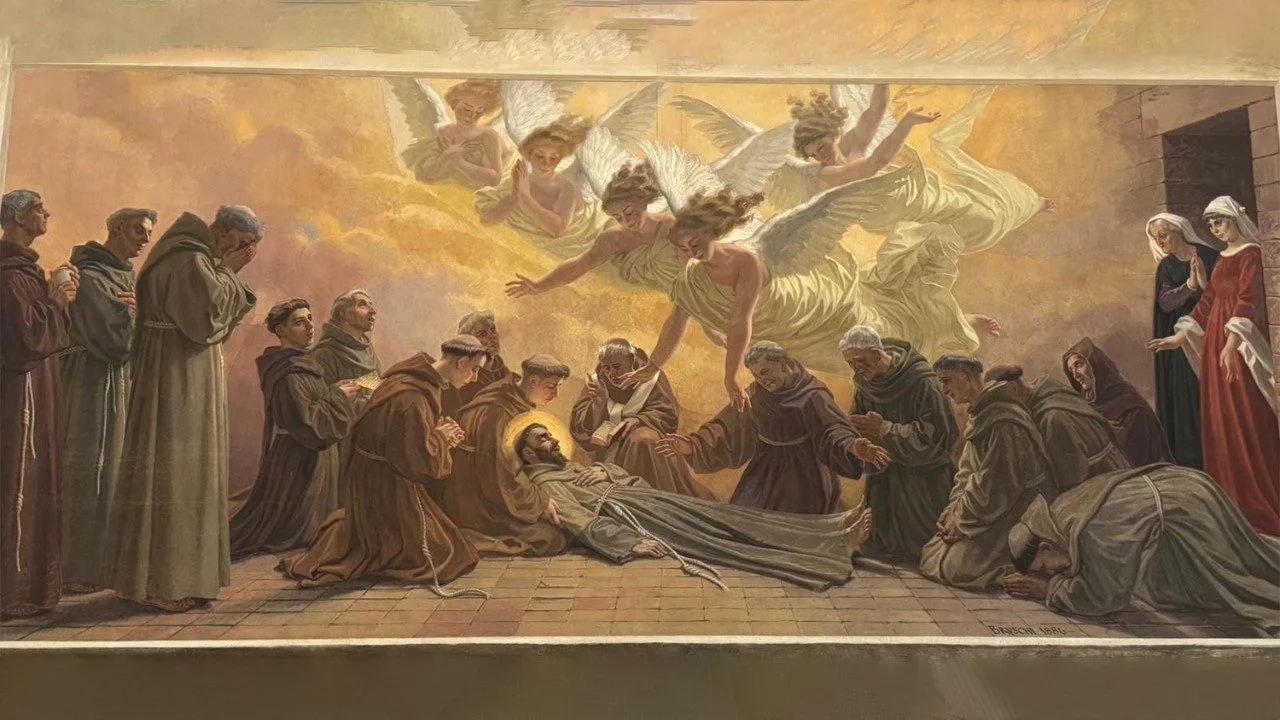
The Regent of the Apostolic Penitentiary comments on the decree published on Friday announcing plenary indulgences during the special Jubilee Year proclaimed by Pope Leo XIV on the occasion of the 800th anniversary of the Saint’s death, stressing. “The Year of Saint Francis must not become yet another chapter rich in special spiritual effects, but a silent passage from enthusiasm to deep maturity, from spectacular celebration to imitation in daily life.”
By Fr. Marek Weresa
The special Jubilee Year of Saint Francis proclaimed by Pope Leo XIV will take place from 10 January 2026 to 10 January 2027, on the occasion of the eighth centenary of the death of Saint Francis of Assisi.
In an interview with Vatican Media, Bishop Krzysztof Nykiel, Regent of the Apostolic Penitentiary, said we must not fear that the sacred time of the Jubilee will become “banal.
On this day in which the Decree of the Penitentiary announcing the plenary indulgences during this special Year was published, Bishop Nykiel speaks of mercy that surpasses the limits of human justice and stresses that indulgence is not a “dispenser of graces.”
The Apostolic Penitentiary has issued a Decree granting the plenary indulgence during the Year of Saint Francis on the occasion of the 800th anniversary of his death. What exactly are the conditions, and to whom is it addressed?
The Apostolic Penitentiary, in accordance with the will of Pope Leo XIV, has issued a Decree granting the faithful the plenary indulgence during the Year of Saint Francis, celebrated on the occasion of the 800th anniversary of the death of the Saint of Assisi. The life of the Poor Man of Assisi shows that God’s mercy works in history also through people who have opened their hearts to His action.
Looking at his example, we see that God’s grace can transform even the greatest weaknesses. Precisely indulgence makes it possible to free the heart from the burden of sin, since it is the remission by God of the temporal punishment for sins that have already been forgiven in the sacrament of penance and reconciliation, so that one may carry out the due reparation in full freedom.
Therefore, the Jubilee is an opportunity for the faithful to rekindle their faith, strengthen their relationship with God and with the community of the Church.
To obtain the plenary indulgence during the Year of Saint Francis, certain specific conditions indicated by the Church must be fulfilled: sacramental confession, Eucharistic Communion, certain prayers according to the intentions of the Pope, interior detachment from sin, and the performance of certain works, such as a pious pilgrimage to Franciscan churches, participation in Jubilee celebrations, prayer and meditation in the Franciscan spirit, as well as daily acts of charity and humility that express the spirituality of Saint Francis.
I would like to emphasize that a significant element of the document is the care shown for the sick and the elderly who cannot leave their homes; they may unite themselves spiritually to the celebration of the Year of Saint Francis by offering to God their prayers, sufferings, and daily difficulties of life, and by committing themselves to fulfilling the usual conditions as soon as this becomes possible.
The great spiritual experience of the Jubilee Year 2025 is now behind us. We are now facing another special moment: the Year of Saint Francis. How can we avoid spiritual “fatigue” caused by exceptional events? What can we do to prevent this time from becoming banal?
This is a very pertinent question. After the intense and beautiful spiritual experiences of the Great Jubilee, we can indeed be threatened by what might be called an “inflation of holiness,” which occurs when exceptional events lose their ability to move the heart. But in the life of faith, it is not a matter of a continual “more,” but of a “deeper.” The Jubilee Year of Hope was a time of grace; the Church opened wide her doors. Now it is essential to ask ourselves: what has happened to me since then? Without pausing and assimilating experiences, even the holiest moments remain at the level of emotions.
It may be helpful to return to notes, homilies, and retreats from the Jubilee. Identifying and isolating a single concrete fruit that has remained with me (for example, greater trust, reconciliation, a new practice of prayer), and making it a starting point rather than an end in itself. The figure of Saint Francis is particularly valuable in the context of spiritual fatigue. He does not propose “more practices,” but simplicity and authenticity: a return to personal reading of the Gospel, joy in small things, a faith lived in relationships, not only in events.
The year dedicated to Saint Francis can be an invitation to simplify prayer by deepening it, rather than multiplying it; to live the Gospel concretely rather than merely talking about it. We must not fear that the sacred times of Jubilees become “banal.” They are not meant to astonish us continuously, but to give proper orientation to the heart. The Year of Saint Francis must not become another chapter full of special spiritual effects, but a silent passage from enthusiasm to deep maturity, from spectacular celebration to imitation in daily life.
In the document of the Apostolic Penitentiary, we read these words: “This Year of Saint Francis should encourage all of us, each according to his or her own possibilities, to imitate the Poor Man of Assisi.” What message does the life of Saint Francis offer to modern man?
The biography of Saint Francis shows that true imitation of Christ is not based on declarations or ideas, but on a concrete and real lifestyle rooted in the Gospel. He reminds us of the timeless value of poverty and simplicity. By renouncing wealth and social prestige, Francis showed that freedom of heart is born of detachment from material goods. For today’s person, living in a world of consumerism, this is an extremely timely invitation to moderation, responsible use of goods, and placing God and neighbor above material possessions: it is a matter of “being” more than “having.”
In our time, when faith is often superficial or reduced to emotions and experiences, his attitude also encourages consistency between faith and daily life, and witness given through actions rather than only words or feelings. Saint Francis teaches active and fraternal love, especially toward the weakest, the poor, and the marginalized. His life was a response to indifference and sometimes to selfishness—problems just as evident today, when interpersonal relationships tend to flatten and “the virtual prevails over reality.”
Not least, St. Francis also shows that peace is born from a converted heart, not from self-interested declarations or compromises without truth. In a world marked by conflicts, social violence, and insecurity, his life is a call to build peace based on the Gospel of Christ, the only Redeemer of humanity!
