Pope at Audience: Active participation in liturgy leads us to relationship with God
At the Wednesday General Audience, Pope Leo XIV reflects on the Second Vatican Council Fathers' decision to promote liturgical reform, as he focuses on the 1963 Constitution on the Sacred Liturgy, Sacrosanctum Concilium.
By Isabella H. de Carvalho
During the Wednesday General Audience in St. Peter’s Basilica on August 26, Pope Leo XIV highlighted the importance of the liturgical reform enacted by the Second Vatican Council, which encouraged the faithful to participate more actively in the liturgy and enter into a deeper relationship with God.
“Through the Church’s ritual actions, whilst the memorial of the work of salvation is celebrated, the opportunity is provided to experience a true relationship with God, coming into contact with the salvific event,” the Pope said.
“Since the gestures and words of the sacred liturgy are critical to realizing this experience, the participation of the faithful cannot be passive,” he said.
Pope Leo continued his series of reflections on the Documents of the Second Vatican Council, and delivered his final catechesis on the 1963 Constitution on the Sacred Liturgy,Sacrosanctum Concilium.
Sacrosanctum Concilium was the first text to be promulgated at the Second Vatican Council and brought about important changes to the liturgy, such as allowing it to be celebrated in vernacular languages and encouraging a more active participation of the faithful.
In his catechesis, the Pope looked at the reasons why the Council Fathers decided to promote this reform.
Pope Leo XIV during the General Audience (@Vatican Media)
Liturgical reform rooted in living tradition of the Church
Pope Leo noted that this desire for reform did not come suddenly but had been evident in actions and documents published by successive Popes since the beginning of the 20th century.
He cited for example Pope Pius XI’s 1928 Apostolic Constitution Divini Cultus, Pius XII’s choice to reschedule the times of certain Holy Week rites, or Saint John XXIII’s 1960 Motu proprioRubricarum instructum.
“The liturgical reform promoted by the Second Vatican Council is thus firmly rooted in the living tradition of the Church," the Pope said. "A correct understanding of it also enables us to reject the abuses that occurred in certain sectors of the Church during the post-Conciliar period, and which, unfortunately, still occur from time to time today, where some of the principles underlying the reform itself have been taken to extremes or misunderstood."
The Wednesday General Audience on August 26 (@Vatican Media)
Responsibility of bishops and priests to safeguard the liturgy
The Pope also underlined that Sacrosanctum Concilium insists on the point that “liturgical services are not private functions, but are celebrations of the Church, which is the ‘sacrament of unity,’ namely, the holy people united and ordered under their bishops.”
Therefore, the Pope, said that it is “the primary responsibility of pastors, of bishops but also of each individual priest, to safeguard and promote a liturgy which, while respecting liturgical norms, shines with noble simplicity and thus manifests the one, holy, catholic and apostolic Church.”
“Such a liturgy will also be a fundamental vehicle for evangelization, the instrument of grace through which, as the Council teaches, we may learn to offer ourselves and, through Christ’s mediation, be perfected in unity with God and amongst ourselves,” the Pope continued.
St. Peter's Basilica during the Wednesday General Audience (@Vatican Media)
Expression of both divine and human
To understand the reasons for the reform, Pope Leo XIV cited a letter that the then-Archbishop of Milan, Cardinal Giovanni Battista Montini – the future Pope Paul VI – sent to the faithful of his Church in October 1962.
In it he pointed out how the liturgy “is a sincere expression of both the divine and the human,” as it is “a language," “a vehicle for divine teaching,” and a “a voice in dialogue with God.”
“The faithful ‘cannot and must no longer remain silent and passive’” as their “’their physical presence cannot be reconciled with their spiritual absence,” the future Pope had written.
Pope Leo noted that these thoughts are echoed in point 48 of Sacrosanctum Concilium, which emphasized that the Church desired that the faithful not participate in the liturgy as “strangers or silent spectators,” but rather “take part in the sacred action conscious of what they are doing, with devotion and full collaboration.”
In this way, they can “be drawn day by day into ever more perfect union with God and with each other, so that finally God may be all in all,” the Constitution’s text continued.
Pope Leo XIV greets the faithful during the General Audience (@Vatican Media)
Living liturgy that adapts to the times
The Pope said these words showed “a renewed awareness of the value of the liturgy” and allowed it “to shine forth as 'the primary source of that divine exchange in which the life of God is communicated to us'."
From this conviction came the need to make the biblical texts and prayers more accessible and to streamline the order of the celebration, the Pope highlighted.
He explained that, since the “liturgy is a living entity throughout the centuries, it has always been subject to developments and changes,” adapting its forms to the needs of different time periods.
“It is therefore not surprising that the Second Vatican Council, too, with the utmost respect for the heritage of tradition, and precisely in order to make it more accessible, considered it necessary to revise the liturgical books,” the Pope said.
Quoting point 21 of Sacrosanctum Concilium, the Pope noted that the text made a distinction between the “immutable elements divinely instituted” and the human elements which “not only may but ought to be changed with the passage of time.”
Thus, the texts and rites can be changed so that they can “express more clearly the holy things which they signify” and the faithful may be able “to understand them with ease and to take part in them fully, actively, and as befits a community.”
Pope Leo XIV Encyclical commentary
‘Magnifica humanitas’: A reader’s guide
Unpacking Leo XIV’s manifesto for the defense of human dignity in the AI age.
MAY 25, 2026
In his long-awaited first encyclical, released Monday, Pope Leo XIV presents a blueprint for the defense of human dignity in an age of technological revolution.
Pope Leo XIV celebrates his inauguration Mass in St. Peter’s Square on May 19, 2025. © Mazur/cbcew.org.uk.
Magnifica humanitas (“Magnificent humanity”) applies the principles of Catholic social teaching to the novel challenges presented by artificial intelligence in the realms of education, politics, work, and war.
The document takes aim at the 21st-century technological philosophies of “transhumanism” and “posthumanism,” arguing that human potential is fully realized in Christ and His Church.
The encyclical — which is around 38,000 words and takes two to three hours to read — also includes a striking acknowledgement of the Church’s slowness to offer an outright condemnation of slavery, while calling for new efforts to eliminate slave-like conditions in the digital economy.
Here’s a reader’s guide to the encyclical.
What’s the background?
Shortly after his election, Leo XIV explained why he chose a papal name last used by Leo XIII, who famously applied Catholic teaching to the social upheavals of the 19th century in his encyclical Rerum novarum (“Of new things”).
Leo XIV said the main reason for his choice of name was that in Rerum novarum, Leo XIII had “addressed the social question in the context of the first great industrial revolution.”
“In our own day,” the first U.S.-born pope said, “the Church offers to everyone the treasury of her social teaching in response to another industrial revolution and to developments in the field of artificial intelligence that pose new challenges for the defense of human dignity, justice, and labor.”
From that point on, commentators expected Leo XIV to address the topic of AI in his first major teaching document.
Magnifica humanitas was signed on May 15, 2026, the 135th anniversary of Rerum novarum’s publication. The new encyclical, subtitled “On the safeguarding of the human person in the time of artificial intelligence,” was released May 25, the feast of Mary, Mother of the Church, observed the day after Pentecost Sunday.
Let’s see what the text says.
A word cloud showing the prevalence of terms in ‘Magnifica humanitas.’ Created at freewordcloudgenerator.com.
Introduction
In time-honored tradition, the encyclical takes its Latin title from the document’s incipit, or opening words. The first sentence, in the English translation, is: “Humanity, created by God in all its grandeur, is today facing a pivotal choice: either to construct a new Tower of Babel or to build the city in which God and humanity dwell together.”
The introduction explains why the Church, whose mission is to proclaim salvation in Christ, is deeply engaged with social questions. It defines the Church’s social doctrine, which Rerum novarum brought into the modern age, as “a living corpus of truth that safeguards and interprets humanity’s vocation to a full and just life,” rather than “an inert set of concepts.”
The introduction is strikingly Christocentric, mentioning Christ three times.
The res novae of our time Leo XIV notes that Leo XIII’s encyclical addressed the “new things” (res novae) of his time. Our own era is being transformed by “digitalization, artificial intelligence, and robotics.” We are called to engage in “a shared discernment process for identifying the spiritual and cultural roots of ongoing transformations.”
Two biblical images Pope Leo returns to the choice he presented in his opening sentence, between the Tower of Babel and the construction of a city in cooperation with God. He suggests that a biblical story can illuminate the second option: the rebuilding of the walls of Jerusalem by the prophet Nehemiah, described in the Book of Nehemiah. He notes that the book shows that the city is reborn “not through the initiative of one man, but through the shared responsibility of all.”
The pope urges readers to shun “Babel syndrome,” marked by greed and an illusory quest for a single language, and instead embrace the “way of Nehemiah.”
Building for the common good Leo XIV says there are four preconditions for constructing a city for the common good: a strong relationship with God, an acceptance of human weakness, shared responsibility, and “an evangelical language.” This language is marked by clear and frank speech that avoids “humiliating or antagonistic words.”
Remaining human The pope appeals to Catholics, other Christians, and all people of good will to “abandon the construction of yet another Tower of Babel and to join forces in building up the common good.”
Chapter one
The first chapter, entitled “A dynamic approach faithful to the Gospel,” presents the fundamental principles of Catholic social teaching and explains how popes have applied them amid the tumult of the modern age.
Pope Leo says that by explaining the development of social doctrine, he hopes to challenge the perception that it is “an undue interference in ‘worldly’ matters” or “an external code of ethics imposed from above.”
A Church journeying through human history Drawing on a central image of Vatican Council II (1962-65), the pope presents the Church as humanity’s companion on the road of history.
While respecting human freedom, and the distinction between the political and ecclesial spheres, the Church “supports with humble firmness the choices that promote the dignity of every person, the cohesion of communities, and the good of all.”
The wisdom of the word of God in dialogue with the human sciences Leo XIV says the Church is committed to dialogue with the sciences, which helps to sharpen its understanding of the present age and refine its presentation of the Gospel to today’s generations.
The Church offers social doctrine as “a foundation for collective discernment,” while respecting the prerogatives of political institutions.
Social doctrine as a shared discernment Pope Leo underlines that the Church is not seeking worldly influence through its social doctrine. He refers to Pope Francis’ famous principle that “time is greater than space” and his predecessor’s image of reality as “a multifaceted polyhedron.”
Social doctrine doesn’t provide ready-made answers applicable to all eras. It is “a process of shared discernment,” rather than “a handbook of principles and norms.”
The development of social doctrine from Leo XIII to the present Pope Leo says his summary of the evolution of Catholic social thought will not be exhaustive.
The first stages of the Church’s social doctrine Pius XII coined the phrase “social doctrine of the Church” in 1950. But Leo XIV notes that Catholic social teaching’s roots lie deep in the Bible and early Church Fathers.
Yet with Rerum novarum’s publication in 1891, social doctrine “began to take shape as an organic corpus of social teaching.”
The world has changed greatly 135 years on. But Pope Leo says two of the encyclical’s insights remain especially relevant: “the primacy of human labor over any mindset focused solely on finance or productivity” and “the inseparable link between proclaiming the Gospel and pursuing a more just social order.”
The years of the Second Vatican Council Leo XIV credits Pope John XXIII with enhancing Catholic social thought by emphasizing “the global dimension of social issues and the language of rights.”
With the document Gaudium et spes, Vatican Council II achieved a further breakthrough by proposing a “method of discernment that invites us to interpret historical changes guided by the Gospel and human expertise.”
The recent Magisterium Pope Leo sums up the contributions of John Paul II, Benedict XVI, and Francis. He credits the Argentine pope with giving “the first significant systematic treatment of the environmental crisis in a social encyclical,” in 2015’s Laudato si’.
Interpreting history in the light of faith Leo XIV stresses that Catholic social teaching is an ever-evolving body of thought, describing its development as “harmonious, though not always linear.”
Chapter two
The second chapter, “Foundations and principles of the social doctrine of the Church,” explores the “core set of unchanging truths” at the center of Catholic social thought.
The human person: image of the Triune God Pope Leo says the Church’s social doctrine rests on the understanding that each human being is created in the image and likeness of the Trinity. Every person is “planned and willed by God to enter into communion with him, with others, and with creation.”
The equal dignity of all human beings Catholic social thought is also based on the notion that all human beings have an innate dignity that can never be erased.
The supreme value of human rights The pope says the Church appreciates the modern era’s recognition of human rights, codified in the UN’s 1948 Universal Declaration of Human Rights.
But he laments that, in practice, the rights of many — especially women — continue to go unrecognized.
The principle of the common good The pope says “the common good” is a foundational principle of the Church’s social doctrine. The concept should not be understood as “the sum total of individual benefits,” but rather as “a greater good that belongs to everyone.” The common good can only flourish through concerted collective efforts.
The principle of the universal destination of goods Leo XIV observes that, although a right to private property exists, “it is always subordinate to the universal destination of goods.” This means that not only material goods but also “immaterial and cultural goods” are meant to benefit humanity as a whole, rather than a select few.
The principle of subsidiarity Pope Leo recalls that the Church has long insisted there are limits to state power. The state must respect the freedom and responsibilities of the family and individuals, without seeking to supplant them. In doing so, governments acknowledge the concept of subsidiarity.
The pope says this principle is especially relevant amid the digital revolution, in which private companies are monopolizing “expertise, data, and decision-making authority,” while defining “conditions for access, rules of visibility, forms of interaction, and even economic opportunities.”
The principle of solidarity Closely connected with subsidiarity is the notion of solidarity: “the concrete recognition that the future of each individual is connected to the future of all.”
The principle of social justice Pope Leo defines the quest for social justice as “a concrete way of following Jesus and remaining faithful to the Gospel,” rather than the pursuit of an ideological program.
Striving for social justice means helping to build an order that will “allow everyone — particularly the weakest — to live a truly dignified life, without leaving anyone behind.”
Integral human development For the Church, true development isn’t solely concerned with material wellbeing, but the full realization of human potential, “in its spiritual, cultural, moral, and relational dimensions.”
An examen for the Church Pope Leo urges Catholics to undergo an examination of conscience (examen) about how well they apply these social principles in everyday life.
He says that “listening to the victims of spiritual, economic, institutional, sexual and power-based abuse, as well as abuses of conscience, is an integral part of a journey toward justice.” This path “includes acknowledging the harm done, just reparation, and taking steps to prevent it from happening again.”
Chapter three
The third chapter, “Technology and dominance: The grandeur of humanity in light of the promises of AI,” applies the principles of Catholic social teaching to a 21st-century society grappling with the rise of AI.
The technocratic paradigm and digital power Pope Leo highlights what Pope Francis called the “technocratic paradigm,” which prizes efficiency, control, and profit. He cites the German priest Romano Guardini, a thinker beloved of recent popes, who said: “Contemporary man has not been trained to use power well.”
Leo XIV notes the “concentration of power” in the digital age, where influence is in the hands of a few and often operates in an opaque fashion.
Artificial intelligence Given the rapid development of AI, any discussion of its characteristics can become swiftly outdated, the pope observes. Even those who create AI systems don’t fully understand them. There is no single adequate definition of AI. All of this makes addressing the phenomenon difficult.
Leo XIV insists AI is not equivalent to human intelligence. It is merely imitative, even if it is able to process data in a fraction of the time taken by humans.
“So-called artificial intelligences do not undergo experiences, do not possess a body, do not feel joy or pain, do not mature through relationships, and do not know from within what love, work, friendship or responsibility mean,” he writes.
“Nor do they have a moral conscience, since they do not judge good and evil, grasp the ultimate meaning of situations, or bear responsibility for consequences.”
A valuable tool that requires vigilance Pope Leo calls for a “measured and vigilant” approach to the new technology. He advises users not to become too reliant on AI, to accept its promptings uncritically, or form an emotional bond with it.
He acknowledges that AI’s “words of advice, empathy, friendship and even love” can be “engaging and at times genuinely helpful.” But they trick undiscerning users into believing they are establishing “a relationship with a real personal subject.”
The pope calls for new efforts to reduce data centers’ dependence on massive amounts of energy and water.
Responsibility, transparency, and the governance of AI Leo XIV says there is a danger of accepting AI systems as morally neutral, when in fact they reflect their creators’ assumptions.
It must be possible to identify who is responsible for decisions regarding AI, and “when necessary, challenge them and remedy any harm caused.” If this requirement slows down AI’s development, then it is a price worth paying for human wellbeing.
Aligning AI systems with human values is not enough, the pope argues. What the new technology truly needs is “a more active political involvement that is capable of slowing things down when everything is accelerating.”
He says the concentration of power in the digital world needs to be countered “by clear criteria and effective oversight.” Data should be seen as “a common or shared good,” rather than left solely in private hands.
In paragraph 109, he succinctly applies each of the Catholic social principles to AI.
Commitment to the common good means “exposing this new form of epistemic, economic, and political asymmetry and naming the new monopolies of AI.”
Recognition of the universal destination of goods means “finding ways of ensuring universal access to both technologies and the education needed to use them.”
Promoting subsidiarity “calls for protecting the ability of communities to make choices and corrections.”
Growing in solidarity “obliges us to recognize the hidden, often exploited workers, who sustain algorithmic systems.”
Pursuing justice “requires questioning the global distribution of power that decides who in fact can train these models and who is merely subjected to them.”
What must not be lost Pope Leo says that new technology encourages us to see ourselves as “a project to be optimized rather than as persons called to relationship and communion.” When intelligence is prized above all other facets of life, its true purpose of enhancing human existence is lost.
Underlying narratives: transhumanism and posthumanism Leo XIV builds on the critique of two 21st-century philosophies presented in the International Theological Commission’s February 2026 document “Quo vadis, humanitas?”
On one side, there is transhumanism, which “envisions the enhancement of human beings through technologies.” On the other is posthumanism, which seeks “a hybridization of human beings, machines, and the environment” that would amount to a new evolutionary stage for terrestrial life forms.
The Church detects in both philosophies a pressure “to accept that some lives are less useful, less desirable, or less worthy.” It fears that “in the name of progress, ‘necessary sacrifices’ may begin to be justified, placing the burden on the most vulnerable in pursuit of a supposed optimization of the species.”
The limit, the heart, the grandeur of the human person Pope Leo says it is common today to perceive human limitations, such as “incapacity, illness, old age, suffering, vulnerability,” as an error to be corrected. Faith, however, accepts finitude.
“To eliminate suffering entirely would mean, in the end, extinguishing love and desire as well,” he writes.
Encountering our limits opens us to God and our neighbor. It can also inspire what Leo XIV calls “prophetic” works as art, such as Beethoven’s Symphony No. 9, Picasso’s “Guernica,” and Steven Spielberg’s “Schindler’s List.”
The pope highlights individuals who have changed history by their defense of human dignity: Martin Luther King, Jr., Nelson Mandela, St. Laura Montoya, St. Teresa of Calcutta, Dorothy Day, Marie Skłodowska-Curie, Maria Montessori, the U.S. Protestant missionary Elisabeth Elliot, the Kenyan environmentalist Wangari Maathai, and Pakistan’s slain premier Benazir Bhutto.
He also extols the “martyrs of fraternity and justice” St. Maximilian Kolbe, St. Óscar Romero, and Bl. Enrique Angelelli, as well as the Vietnamese Cardinal Francis-Xavier Nguyễn Văn Thuận.
The authentic ‘more than human’: grace and Christian humanism Leo XIV argues that Christianity offers a more compelling vision of human transformation, in which we are elevated above our limitations by God’s grace.
“For an algorithm, an error is a flaw to be corrected; for a person, however, an error can be a catalyst for profound change,” he writes.
Two cities and two loves Pope Leo returns to the choice set out at the start of the encyclical. He recalls that St. Augustine of Hippo, who inspired the religious order to which the pope belongs, summed up history as a struggle between two loves: “on the one hand, the love of God and neighbor; on the other, the exclusive love of self.”
The battle continues in the age of AI, he says, and we must choose between constructing Babel and rebuilding Jerusalem.
Chapter four
The fourth chapter, “Safeguarding humanity at a time of transformation: truth, work, freedom,” focuses on the consequences of the digital revolution.
Truth and democracy Leo XIV acknowledges that the internet is dramatically altering public discourse and political messaging. The ability to disseminate falsehoods imperils democracies, which depend upon a genuine search for truth. The pope cites the 20th-century philosopher Hannah Arendt, who said the ideal subject of an authoritarian regime is one who no longer recognizes the distinction between true and false.
Communication and the collective imagination The pope says those in charge of the means of communication have a special responsibility to pursue truth and safeguard human dignity.
Toward an ecology of communication Pope Leo calls for the promotion of an “ecology of communication” that includes greater transparency about decision-making in relation to content, the protection of personal data, the promotion of “serious journalism,” and the creation of forums for authentic debate.
The pope says the Church too must be committed to transparent communication, thanking journalists who have helped expose ecclesial injustices and abuses.
An educational alliance for the digital age Given empirical studies showing the social media’s negative impact on children, Leo XIV expresses support for government efforts to set appropriate age limits, hold service providers accountable for content, and increase protections against online sexual exploitation and violence.
The central role of schools The pope says the educational world risks being overwhelmed by AI, to the detriment of children’s development. He calls for a “renewed educational alliance” between families, schools, parishes, and public institutions to help form young people to use AI judiciously and with respect for others.
The value of work Pope Leo recalls the high value the Church places on work. Automation, robotics, and AI can “de-skill workers, subject them to automated surveillance, and relegate them to rigid and repetitive tasks.”
The problem of unemployment Leo XIV says there is a legitimate fear that AI will eliminate jobs in some areas, with a severe impact on families, young people, and local economies. He says that as a general rule, employees must safeguard jobs and “the irreplaceable role of the individual.” But he acknowledges that rapid global social changes cannot be fully controlled. Local communities and nations will need to tackle problems as they arise. This will involve “well-structured models, local initiatives, progressive redistribution, and new rights of access to essential goods.”
He proposes that “every introduction of automation and AI should be accompanied by verifiable measures to protect the employment, retraining, and participation of workers.”
An economy that values dignity Pope Leo takes up Pope Francis’ critique of the global economy, arguing that recent financial crises have shown that “it is always the poor who pay the highest price, while the theories that promise automatic general prosperity often prove to be illusory.”
He calls for new economic measurements, beyond GDP, that track overall wellbeing and environmental quality.
“More than ever, in the age of AI and robotics, it is no longer possible to rely solely on the ‘invisible hand’ of the market,” he writes, calling for robust political intervention, including at the international level.
Families and young people: the social conditions for hope In a haunting passage, the pope says that “while technological successes are celebrated, the social fabric is progressively eroded, as if by a silent virus.”
He cites a 1996 U.S. bishops’ document on young adults to highlight the impact of job insecurity on the younger generation. He appeals for “a political creativity that will promote ‘work’ and place the family and coming generations at the center.”
Dependencies and societal control Pope Leo explores how new technologies exploit human weaknesses in a battle for attention, creating addictions and undermining mental health. They can also be used to exert unprecedented social control over access to credit, employment, and services.
The pope says these threats call “for clear rules, transparency, [and] the possibility of recourse and proportionate limits on the use of intrusive technologies.”
Breaking the chains of new forms of slavery Leo XIV argues that the digital economy is riddled with more or less invisible forms of servitude. It depends, he notes, on poorly paid moderators sifting through hours of disturbing content and workers extracting for a pittance the rare earth materials that power new technologies.
In paragraph 176, he concedes that the Church has only “gradually come to a deeper awareness of the gravity of these issues.” He laments that it took 18 centuries for the Church to explicitly recognize the incompatibility of slavery with innate human dignity.
“For this, in the name of the Church, I sincerely ask for pardon,” he writes.
He calls for a comprehensive effort to eliminate modern slavery, at every level of the digital economy, from the coltan pit to the anonymous payment methods used by human traffickers.
A shared responsibility The pope says that governments, businesses, educational institutions, and citizens need to work together to ensure new technologies genuinely enhance human life, rather than creating new forms of exclusion and subjugation.
Chapter five
The fifth chapter, “The culture of power and civilization of love,” considers how new technology is changing warfare. It reminds readers of the two paths before humanity: the construction of Babel through a reliance on power and pride, or the rebuilding of Jerusalem through care for humanity and the common good.
The civilization of love in the digital age Pope Leo considers how St. Paul VI’s concept of “the civilization of love” can be realized in a digital world. The task, he says, is to turn the “imposed interdependence” of social networks into “a willed and chosen solidarity.”
The culture of power The pope laments the growth of a “culture of power,” which sacrifices human life in the pursuit of strategic interests.
The normalization of war Leo XIV argues that “we are witnessing a real paradigm shift in public discourse and in decisions regarding rearmament, with a troubling revival of war as an instrument of international politics, while the very ethical principles that had previously limited its use are being eroded.”
Alongside military action, there is an information war, marked by “simplistic narratives, a friend-or-foe mentality, disinformation, and fear.”
“Today, more than ever, without prejudice to the right to self-defense in the strictest sense, it is important to reaffirm that the ‘just war’ theory, which has all too often been used to justify any kind of war, is now outdated,” he writes.
“Humanity possesses far more effective and capable tools for promoting human life and resolving conflicts, such as dialogue, diplomacy, and forgiveness.”
Force without limits Pope Leo laments widespread rearmament and the failure of efforts to reduce nuclear arsenals. He sees a new willingness to engage in war without considering the consequences. He notes that the beneficiaries include “jihadist groups, private militias, and criminal networks,” which thrive on a constant state of conflict.
Weapons and artificial intelligence The pope argues that, in warfare, final ethical judgments cannot be left to AI, however much it is supposedly imbued with human values. He says “it is not permissible to entrust lethal or otherwise irreversible decisions to artificial systems” and “no algorithm can make war morally acceptable.”
The crisis of multilateralism Pope Leo traces the rise of the “culture of power” to a weakening of multilateral institutions established after the Second World War.
A supposed political realism Leo XIV targets a mindset that ignores history, blithely believing that the 20th century’s horrors cannot be repeated. He decries this “false realism,” which leads impoverished countries to plough millions into defense while neglecting health and education.
He suggests the world could be facing “wars that are perhaps even more dangerous than those of the past, since they tend to disregard all ethical limits.”
Building the civilization of love Concerned, perhaps, that he will be accused of an “Augustinian pessimism” about human nature, Pope Leo says that goodness can flourish amid the evils of the age.
We can all do our part He pushes back against the common objection that no individual can make a meaningful difference. He unexpectedly cites the rallying cry of the “Lord of the Rings” character Gandalf to the leaders of the Free Peoples of the West ahead of a supposedly hopeless battle: “It is not our part to master all the tides of the world, but to do what is in us for the succour of those years wherein we are set, uprooting the evil in the fields that we know, so that those who live after may have clean earth to till.”
The need to disarm words Echoing his first address after his election, Pope Leo calls for verbal disarmament.
Building peace through justice The pope says that individuals can help to build peace by acting with justice toward those around them.
Adopting the perspective of victims He also calls for greater empathy with the victims of war.
Cultivating a healthy realism Instead of “false realism,” Pope Leo appeals for a “healthy realism” that takes a hard, analytical look at conflicts before seeking “viable paths for making peace.”
Reviving dialogue He says that engaging in dialogue is a prerequisite for making peace, citing Pope John Paul II’s inter-religious initiatives in the “spirit of Assisi” and Pope Francis’ engagement with Ahmed el-Tayeb, the Grand Imam of Al-Azhar.
The necessity of diplomacy and multilateralism The pope argues that “the impulsive broadcasts, aggressive rhetoric, and power politics that characterize our time” make diplomacy and multilateral platforms more important than ever. He points to the Holy See’s diplomacy as an example.
Praying and hoping He concludes that peace is ultimately a gift from God.
Conclusion
At the end of the encyclical, Pope Leo proposes what he calls “a sober yet demanding program of Christian life with which we can navigate this epochal change in the light of the Gospel.”
The Word became flesh Against the promises of transhumanism and posthumanism, the pope presents the mystery of the Incarnation. He issues an open invitation “to contemplate, in the face of the Son of God, the grandeur of humanity that shines a light also on the era of AI.”
One body in Christ He says the times demand “a Eucharistic spirituality, that is, a spirituality of ecclesial unity in love.”
“The Eucharist opens us to justice and sharing, with a preferential concern for those who are burdened by poverty or marginalization,” he writes.
The construction site of our time The pope invites Catholics to be like a “wise architect” who seeks to build up the world for the common good, inspired by longing for the Kingdom of God.
He returns, for a final time, to Nehemiah, saying the prophet offers “a striking parable of our own vocation” in the digital age.
The song of hope: the Magnificat Leo XIV closes with a meditation on the Magnificat, the Virgin Mary’s hymn of praise during a visit to her cousin, Elizabeth.
“In the humble fidelity of daily life, even the era of AI can become a time in which the Holy Spirit brings about the civilization of love in our lives,” he reflects.
A brief note on footnotes
The figure most frequently cited in Magnifica humanitas is Pope Francis, followed by St. John Paul II. Some ways behind them are Benedict XVI and St. Paul VI.
The quirkiest reference is undoubtedly to J.R.R. Tolkien’s “The Lord of the Rings,” specifically the final volume, “The Return of the King.”
Other notable cited works include Viktor Frankl’s 1946 memoir “Man’s Search for Meaning,” Hannah Arendt 1951 “The Origins of Totalitarianism,” and a discourse by the 17th-century French cardinal Pierre de Bérulle, the founder of the French School of Spirituality, who was strongly influenced by St. Augustine.
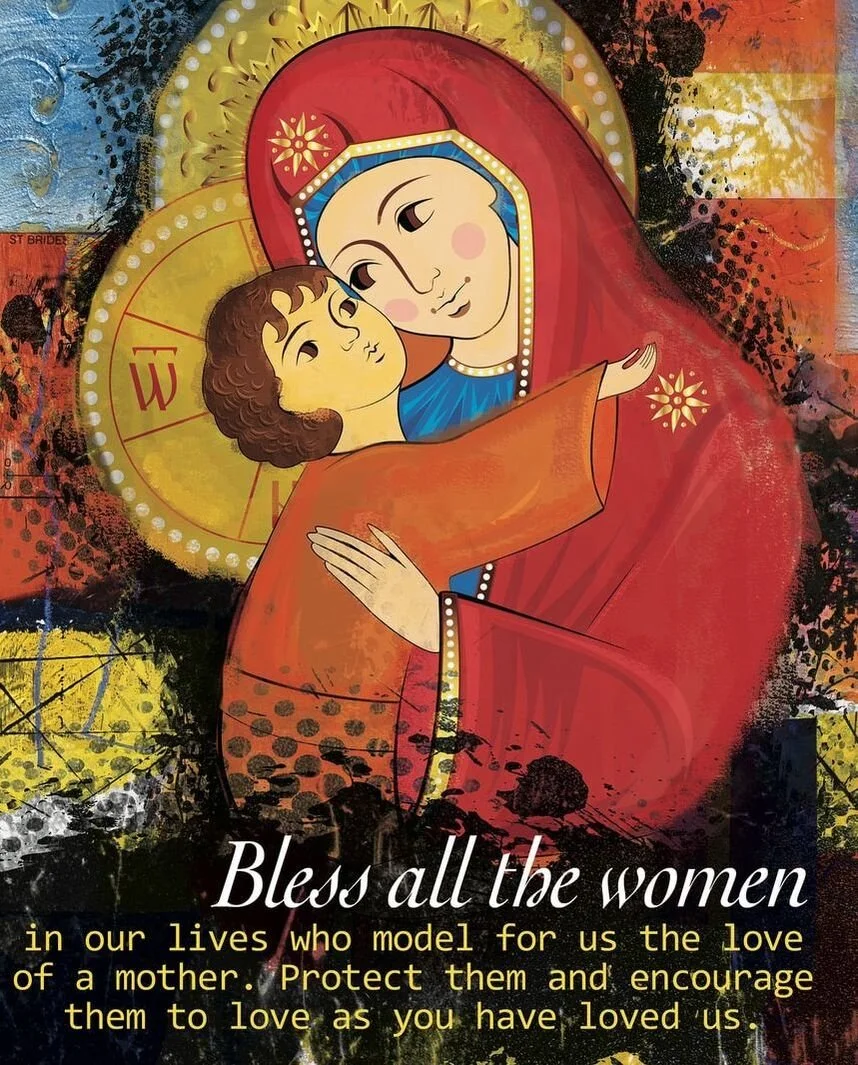
Pope Leo’s over 400 appeals for peace during first year of pontificate
In the first year of his pontificate, Pope Leo XIV has appealed hundreds of times for a reconciliation that is “unarmed and disarming,” and urged the “lords of war” to listen to “a melody greater than ourselves.”
By Edoardo Giribaldi
“Unarmed and disarming.” With these words, at sunset on 8 May 2025—the dawn of his pontificate—Pope Leo XIV described his vision of peace.
It is not the silence of weapons that comes from a ceasefire, he explained on Christmas morning, distancing himself even more clearly from the fragile agreements of international geopolitics.
Such agreements risk making every appeal for reconciliation seem disarming in the negative sense: stripping people of the will to react, respond or resist. It is that “great weariness” that threatens to seep into hearts and empty words of meaning.
During the Urbi et Orbi Blessing on 25 December, he pointed to the horizon of a “wild peace,” inspired by the poet Yehuda Amichai: a reconciliation that springs up “suddenly,” like wild “flowers,” those that stubbornly, with seeming naïveté, grow through cracks in the concrete. “May it come,” Pope Leo said of that harmony, “because the field needs it.”
More than 400 mentions of “peace”
The word “peace” appears more than 400 times in the addresses delivered by the Bishop of Rome during the first year of his pontificate. It has been applied in different contexts, beginning with members of the press, who attended the Pope’s first meeting in the Paul VI Hall.
“You are on the front lines” in reporting wars and uncovering the aspirations for reconciliation within them, the Pope said, encouraging them to promote a form of communication “capable of leading us out of the ‘Tower of Babel’ in which we sometimes find ourselves, out of the confusion of loveless languages, often ideological or partisan.”
For peace does not rest beneath banners. Above all, peace is not naïve. Therefore, it is useless for “the lords of war” to pretend “not to know that it takes only a moment to destroy, but often not even a lifetime is enough to rebuild.” It is useless, too, for them to pretend “not to see that billions of dollars are needed to kill and devastate, while the resources needed to heal, educate and lift people up cannot be found.”
There is no use pretending, because “people are beginning to realize the amount of money that ends up in the pockets of merchants of death,” Pope Leo said when meeting participants in the plenary assembly of the Reunion of Aid Agencies for the Oriental Churches (ROACO). He exposed the paradox, adding: “Money that could be used to build new hospitals and schools is instead being used to destroy those that already exist!”
The consequences of war
From the Pope’s first mentions of peace in the Vatican to his latest words, spoken less than a month ago in the heart of Africa, in Bamenda, Cameroon, during a meeting in St. Joseph’s Cathedral precisely to promote reconciliation with the local community, Pope Leo’s message of communion stretches across different temporal and geographical dimensions.
Above all, the harmony evoked by the Pope goes beyond the heights of the palaces where the “lords of war” decide on “actions of death”; it bends down over the devastated and helpless bodies of those who “feed only on despair, tears and misery.”
These words resounded at the headquarters of the FAO, the United Nations Food and Agriculture Organization, as a reminder of one of the many dramatic side effects of conflict: hunger.
Depth, closeness: the knee bends, offering, as described in the homily for the Mass in Coena Domini on Holy Thursday, the image of a God who is almighty in service.
The idols that fuel conflicts
Holy Week itself marked one of the high points of the Bishop of Rome’s appeals for peace.
On the morning of Palm Sunday, he reiterated that no one can justify war in the name of God: God “does not listen to the prayer of those who wage war, and rejects it, saying: ‘Even though you multiply your prayers, I will not listen; your hands are full of blood.’”
As the Successor of Peter, the Pope bends down over the wounds of war. He looks from below upward, while at the same time rising above those who are “enslaved to death” because they have turned “their backs on the living God in order to make themselves and their own power a mute, blind and deaf idol.”
Thus, just as his words encompass the full breadth of peace, Pope Leo leaves out none of the idols that feed today’s conflicts. If it is not the thirst for power, it is often the thirst for money, as he recalled during his journey to the Principality of Monaco.
Pope Leo releases a dove as a symbol of peace in Cameroon (@Vatican Media)
The lightness of reconciliation
The words spoken during Holy Week after the Rosary to invoke the gift of peace were heavy but counterbalanced by an idea of harmony that is also lightness. He spoke of harmony that does not tread upon the earth except to dance to the rhythm of music, as he recalled in Lebanon.
“It is like an interior movement that flows outward, enabling us to let ourselves be guided by a melody greater than ourselves, the melody of divine love,” he reassured the people of a country that, like few others, feels the groans of war.
Between dance and journey, then, peace is something to be reached, with the certainty that one day it will be attained. Otherwise, the theme chosen by the Pope for the 59th World Day of Peace would be emptied of meaning: “toward” a peace that is, precisely, “unarmed and disarming.”
The audacity of disarmament
The Pope’s appeals touch on the concrete reality of conflicts and one of their most evident triggers: the arms race.
As the Bishop of Rome himself recalled, global military spending rose by 9.4% in 2024, confirming an uninterrupted ten-year trend and reaching 2.718 trillion dollars, or 2.5% of global GDP.
“Lay down your sword!” the Pope urged the powerful of the world, taking up the words of Jesus and inviting them to have “the audacity of disarmament” during the Marian Vigil for peacein October 2025.
Today, weapons have changed: from swords to drones, which distort the image of war into “the scenario of a video game.” Yet war remains a dramatic reality to which we must not grow accustomed, as he forcefully insisted at the end of the General Audience of 18 June 2025.
Sport and culture: instruments of reconciliation
On the contrary, it is necessary to find creative ways to avoid “indifference toward the law.” These words come from a letter the Pope wrote precisely to identify one such vehicle of communion: the value of sport, which teaches that in a competition—but above all in life—“a fall is never the final word.”
Christians themselves, Pope Leo said at the General Audience of 3 September 2025, do not conquer evil by force, “but by fully accepting the weakness of love.”
Communion also passes through contemplation and the value of study, promoting, as he asked the Italian bishops, “paths of education in nonviolence.” Speaking of peace, the Pope recognized the need for “a realignment of policies” linked to education, one that encourages a “culture of memory” capable of preserving “the awareness gained in the twentieth century” and not forgetting its millions of victims.
“After centuries of history, how can anyone believe that acts of war bring about peace and not backfire on those who commit them?” he asked, again addressing ROACO.
Everything can be forgotten, even “the light,” the Pontiff acknowledged. And so may “wild peace” come: the stubborn flower in the midst of the concrete, with a disarming beauty.
Pope Leo XIV
Don't let 'thieves' rob your joy and peace
As he prays the Regina Caeli, Pope Leo XIV invites the faithful to trust the Lord, and warns against letting ourselves be deceived by 'thieves' who seek to destroy our joy by leading us astray.
By Deborah Castellano Lubov
The Lord does not come to take anything from us. Rather, He is the Good Shepherd who increases life and offers it to us in abundance.
Pope Leo XIV offered this reminder during his Regina Caeli address in the Vatican on Sunday.
Before reciting the midday Marian prayer of the Easter season, the Holy Father invited the faithful to keep their eyes and hearts focused on the gifts that nourish faith and joy, while remaining vigilant against anything that may undermine them.
Shepherds and thieves
The Pope began by recalling the day’s reading from the Gospel of John, in which Jesus compares Himself to both a shepherd and the gate of the sheepfold, highlighting the contrast between the shepherd and the thief.
He explained that Jesus distinguishes clearly between the two: the shepherd enters through the gate because of his bond with the sheep, while the one who climbs in another way reveals himself as a thief intent on harm.
Christ, by contrast, the Pope stressed, comes so that all may have life in abundance.
Jesus knows and seeks us like a shepherd seeks his sheep
The Pope emphasized that Jesus is bound to us by a relationship of friendship. He knows us, calls us by name, guides us, and seeks us out when we are lost, caring for us with tenderness.
The Holy Father stressed that Jesus does not come to take away our life or freedom, but to lead us along the right path.
Rather than deceiving our conscience, Pope Leo underscored, Christ enlightens it. And rather than diminishing our joys, the Pope continued, Jesus opens them to a deeper and lasting happiness.
Thus, the Holy Father reassured the faithful that those who entrust themselves to Him have nothing to fear, for He comes not to deprive us, but to give life in its fullness.
Remaining vigilant
At the same time, Pope Leo invited the faithful to remain attentive to what enters their hearts and lives.
"They could be people who, regardless of appearances, suppress our freedom or fail to respect our dignity; beliefs and biases that prevent us from viewing others and life with serenity; mistaken ideas that can lead us to make negative choices; or superficial and consumeristic lifestyles that leave us empty on the inside and push us to live constantly beyond ourselves."
Pope Leo also said we must not forget those “thieves” who, "by pillaging the earth’s resources, waging blood-thirsty wars, or fueling evil in any form, do nothing but rob each of us of the possibility of a future marked by peace and serenity."
In light of this, the Holy Father encouraged everyone to reflect on who they allow to guide them in life and to guard against influences that may lead them astray.
Trust in the Lord
Finally, the Pope reiterated that the Gospel calls us to place our trust in the Lord.
"Christ," the Holy Father reiterated, "does not take anything away; instead, He is the Good Shepherd who gives life in abundance."
Finally, Pope Leo concluded by entrusting all to the intercession of Mary, praying the Blessed Mother may accompany us on our journey.
April 11, 2026
Pope Leo at Prayer Vigil for Peace: Stop planning arms and death
During Pope Leo XIV's Prayer Vigil for Peace in the world, the Pope appeals to leaders of nations to stop and sit at the table of dialogue and mediation, "not at the table where rearmament is planned and deadly actions are decided!" He also insists that the Church will always advance in calling for peace "even when rejecting the logic of war may lead to misunderstanding and scorn," and will always instil "obedience to God rather than any human authority."
By Deborah Castellano Lubov
"I receive countless letters from children in areas of conflict. In reading them, one perceives, through the lens of innocence, all the horror and inhumanity of actions that some adults boast of with pride."
Pope Leo XIV gave this chilling reminder during the Prayer Vigil for Peace he led on Saturday evening in the Vatican, as he urged, "Let us listen to the voices of children!"
READ HERE POPE LEO'S FULL REFLECTION
The Prayer Vigil, which Pope Leo announced during his Easter Sunday Urbi et Orbi address to the city of Rome and the world, was celebrated in St Peter's Basilica at 6 p.m. Rome time, and everyone, both in person and following from home, was invited to join. No tickets were required. Around ten thousand faithful gathered in the Basilica and outside in Saint Peter's Square.
Prayer can move mountains
People around the world joined the Holy Father in praying the Glorious mysteries of the Rosary, in person and remotely, with meditations from various Church Fathers, including St. Augustine of Hippo, St. John Chrysostom, and St. Ambrose of Milan. During the Rosary, faithful from different continents lit candles with the flame from the Lamp of Peace in Assisi, which burns perpetually at the tomb of St. Francis of Assisi.
The Pope thanked all those present and all those praying from afar for praying for peace, noting that their prayer is an expression of that faith which, as Jesus reminded, moves mountains. He began by recalling that: "War divides; hope unites. Arrogance tramples upon others; love lifts up. Idolatry blinds us; the living God enlightens."
Yet, he reassured, "all it takes is a little faith, a mere 'crumb' of faith, in order to face this dramatic hour in history together — as humanity and alongside humanity." He emphasized that prayer is not "a refuge in which to hide from our responsibilities, nor an anesthetic to numb the pain provoked by so much injustice," but rather is "the most selfless, universal and transformative response to death."
Nothing can confine us to a predetermined fate
In this context, he argued, "Nothing can confine us to a predetermined fate, not even in this world where there never seem to be enough graves, for people continue to crucify one another and eliminate life, with no regard to justice and mercy."
Pope Leo remembered Saint Pope John Paul II's adamant appeals for "no more war" and his insistence on our responsibility to do everything possible to counter it.
Pope Leo in prayer during prayer vigil (@Vatican Media)
As we pursue peace, the Holy Father marveled how prayer teaches us how to act.
"In prayer," Pope Leo marveled, "our limited human possibilities are joined to the infinite possibilities of God." Moreover, he reflected, thoughts, words and deeds then "break the demonic cycle of evil and are placed at the service of the Kingdom of God. A Kingdom in which there is no sword, no drone, no vengeance, no trivialization of evil, no unjust profit, but only dignity, understanding and forgiveness."
True strength comes from serving life, not from displays of power
The Pope warned likewise against the idolatry of self and money.
"Enough of the display of power! Enough of war! True strength," rather he said, "is shown in serving life."
Thus the Pope encouraged, let us "unite the moral and spiritual strength of the millions and billions of men and women, young and old, who today choose to believe in peace, caring for the wounds and repairing the damage left behind by the madness of war."
In this context, he recalled the traumatic effects on innocent children who suffer the terror of war, and called on humanity to hear their cry and protect them.
Appeal to the leaders of nations to pursue dialogue and mediation
The Pope reaffirmed the "certainly binding responsibilities that fall to the leaders of nations."
"To them we cry out," Pope Leo said, "Stop! It is time for peace! Sit at the table of dialogue and mediation, not at the table where rearmament is planned and deadly actions are decided!"
Yet, he noted, an equally significant responsibility falls to all of us men and women from all over the world, to reject war, not only in word, but in deed.
Prayer calls us to leave behind whatever violence remains in our hearts and minds. Let us turn to a Kingdom of peace that is built up day by day — in our homes, schools, neighborhoods, and civil and religious communities.
Such a Kingdom, he added, is to counter polemics and resignation through friendship and a culture of encounter.
Let us believe again in moderation and good politics
"Let us believe once again in love, moderation and good politics. We must form ourselves and get personally involved, each following our own calling. Everyone has a place in the mosaic of peace!"
He went on to observe that the Rosary, like other ancient forms of prayer, united the faithful this evening in its steady rhythm built on repetition, pointing out that peace gains ground in the same way, "word by word, deed by deed, just as a rock is hollowed out drop by drop, or fabric woven stitch by stitch."
The Holy Father reminded that these are the slow rhythms of life, a sign of God’s patience.
"We must not allow ourselves to be overwhelmed by the pace of a world that does not know what it is chasing. Rather," he suggested, "we must return to serving the rhythm of life, the harmony of creation and healing its wounds."
Church instills obedience to God rather than any human authority
The Pope therefore said we are to all return home having made a commitment to pray without ceasing and without growing weary, and to a profound conversion of heart.
Recalling the Church as a great people at the service of reconciliation and peace, the Pope pointed out that She advances without hesitation, "even when rejecting the logic of war may lead to misunderstanding and scorn."
Moreover, he upheld, "She proclaims the Gospel of peace and instills obedience to God rather than any human authority, especially when the inherent dignity of other human beings is threatened by continuous violations of international law."
Thus, the Pope expressed his hope that throughout the world, every community become a ‘house of peace,’ where one learns how to defuse hostility through dialogue, where justice is practiced and forgiveness is cherished. Now more than ever, he recognized, we must show that peace is not a utopia.
A prayer to the Lord who conquered death without weapons or violence
The Pope said that all brothers and sisters of every language, people and nation are one family that weeps, hopes and rises again, and thus, he again called on that family to embrace the appeal of his predecessor Pope, Saint John Paul II, to declare together, “No more war, a journey with no return; no more war, a vicious cycle of grief and violence.”
Pope Leo concluded wishing that the peace of the Risen Christ, the fruit of His sacrifice of love on the Cross, be with all people, and inviting everyone to join him in reciting the prayer for peace below.
Lord Jesus,
you conquered death without weapons or violence:
you shattered its power with the strength of peace.
Grant us your peace,
as you did to the women filled with doubt on Easter morning,
as you did to the disciples who were hiding in fear.
Send forth your Spirit,
the breath that gives life and reconciles,
that turns adversaries and enemies into brothers and sisters.
Inspire in us to trust in Mary, your mother,
who stood at the foot of your cross with a broken heart,
firm in the faith that you would rise again.
May the madness of war cease
and the Earth be cared for and cultivated by those who still
know how to bring forth, protect and love life.
Hear us, Lord of life!
Easter Triduum
St. Joseph Church, Dryden
Mass of the Lord’s Supper Holy Thursday at 7:00pm
Good Friday Communion Service at 3:00pm
Good Friday Stations of the Cross at 7:00pm
Holy Saturday Easter Vigil at 8:00pm
Easter Sunday Mass at 10:00am
The Word of God in the Life of the Church : Pope Leo XIV
Dear brothers and sisters, good morning and welcome!
In today’s catechesis we will look at the profound and vital link that exists between the Word of God and the Church…
Vatican Council II reminds us that “the Church has always venerated the divine Scriptures just as she venerates the body of the Lord, since especially in the sacred liturgy, she unceasingly receives and offers to the faithful the bread of life from the table both of God’s word and of Christ’s body”. Furthermore, “she has always maintained them, and continues to do so, together with sacred tradition, as the supreme rule of faith” (Dei Verbum, 21).
The Church never ceases to reflect on the value of the Sacred Scriptures. After the Council, a very important moment in this regard was the Ordinary General Assembly of the Synod of Bishops on the theme “The Word of God in the life and mission of the Church” in October 2008. Pope Benedict XVI gathered its fruit in the post-Synodal Exhortation Verbum Domini (30 September 2010), in which he affirms: “The intrinsic link between the word and faith makes clear that authentic biblical hermeneutics can only be had within the faith of the Church, which has its paradigm in Mary’s fiat… the primary setting for scriptural interpretation is the life of the Church” (no. 29).
In the ecclesial community, Scripture therefore finds the sphere in which to carry out its particular task and achieve its purpose: to make Christ known and to open dialogue with God. Indeed, “ignorance of the Scriptures is ignorance of Christ”. [1] This well-known expression of Saint Jerome reminds us of the ultimate purpose of reading and meditating on the Scriptures: to get to know Christ and, through Him, to enter into a relationship with God, a relationship that can be understood as a conversation, a dialogue. And the Constitution Dei Verbum presented the Revelation to us precisely as a dialogue, in which God speaks to humans as though to friends (cf. DV, 2). This occurs when we read the Bible with an inner attitude of prayer: God then comes towards us and enters into conversation with us.
The Sacred Scripture, entrusted to the Church and preserved and explained by her, performs an active role: indeed, with its efficacy and power it sustains and invigorates the Christian community. All the faithful are called to drink from this wellspring, first and foremost in the celebration of the Eucharist and the other Sacraments….The Church ardently desires that the Word of God may reach every one of her members and nurture their journey of faith. But the Word of God also propels the Church beyond herself; it opens her continually to the mission towards everyone. Indeed, we live surrounded by so many words, but how many of these are empty! At times we even listen to wise words, which do not however affect our ultimate destiny. On the contrary, the Word of God responds to our thirst for meaning, for the truth about our life. It is the only Word that is always new: revealing the mystery of God to us, it is inexhaustible, it never ceases to offer its riches.
Vatican warns against blogs claiming theological authority
The Vatican's doctrine chief warned that blogs and online commentators increasingly claim a theological authority they do not possess, narrowing the church's ability to holistically engage faith and reality.
Opening the plenary assembly of the Dicastery for the Doctrine of the Faith on Jan. 27, Cardinal Víctor Manuel Fernández, dicastery prefect, said theologians risk "losing the breath of our perspective" when their work becomes narrowly focused on isolated topics.
"But the issue is even more serious since today, on any blog, anyone — even without having studied much theology — can express his or her opinion and condemn others as if speaking ex cathedra," or with infallibility, he said.
Fernández framed the problem as a failure to recognize the limits of human knowledge.
"The more science and technology advance, the more we must keep alive the awareness of our limits and our need for God, so as not to fall into a terrible deception," he said. "Indeed, the very same one that led to the excesses of the Inquisition, the world wars, the Shoah, and the massacres in Gaza: all of which rely on fallacious arguments for their justification."
Fernández, who has often been a target of Catholic blogs since his appointment as prefect in 2023, urged dicastery members to acknowledge those limits, invoke God's guidance in illuminating them and remain open to the perspectives of others.
Pope Leo XIV, with regional representatives of synod teams, listens to and answers questions from participants in the Jubilee of Synodal Teams and Participatory Bodies in the Vatican audience hall Oct. 24, 2025. (CNS/Vatican Media)
The cardinal cited Pope Leo XIV's October homily for the Jubilee of Synodal Teams and Participatory Bodies, in which the pope called for "a church that does not close in on itself, but remains attentive to God so that it can similarly listen to everyone."
Several Catholic blogs have been sharply critical of synodality, the shift toward a more participatory and listening church championed by Pope Francis, often arguing that it risks drifting from Catholic doctrine and blurring distinctions between clergy and laity in church decision-making.
Fernández's call for the dicastery members to "reflect, think, and analyze reality, but while also listening to others" echoed the language of synodality promoted by the pope.
Leo, who promoted synodality as a diocesan bishop in Peru and later participated in the Synod of Bishops on synodality as a Vatican official, has continued his predecessor's focus on pushing for a more participatory church.
And that direction appears to have broad support among the world's cardinals.
At an extraordinary consistory convened by Leo in early January, the 170 participating cardinals selected synodality as one of the priorities to be developed during the first two years of his pontificate. They also chose to focus on the church's mission in light of Francis' apostolic exhortation Evangelii Gaudium, sidelining discussion of curial reform and the liturgy in a move criticized by traditionalist Catholic blogs.
One cardinal who participated in the consistory told the National Catholic Reporter that the liturgy was widely not considered a priority in the discussions among cardinals, and that curial reform was seen as having been substantially addressed following Francis' 2022 apostolic constitution Praedicate Evangelium.
Asked at the end of the consistory how synodality safeguards against doctrinal drift, Cardinal Pablo Virgilio David of Kalookan, Philippines, said that "synodality has been there since the beginning of church history, we are just retrieving the vocabulary."
"The listening [in synodality] is not just listening to one another, but most of all to the Holy Spirit speaking through one another," he said at a press conference following the consistory. "That requires discernment, and the rules of discernment are still being refined in the process of experiencing synodality."
YEAR OF ST. FRANCIS
'Indulgence is an encounter with God, not a spiritual shortcut'
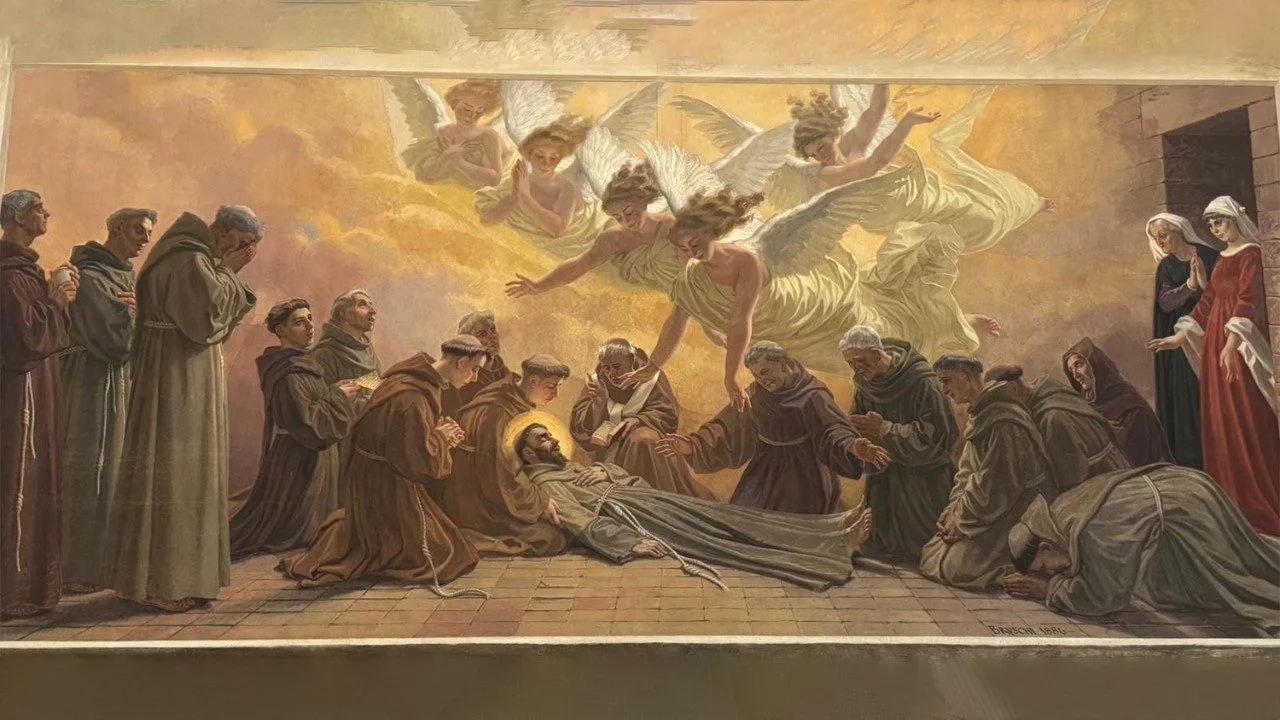
The Regent of the Apostolic Penitentiary comments on the decree published on Friday announcing plenary indulgences during the special Jubilee Year proclaimed by Pope Leo XIV on the occasion of the 800th anniversary of the Saint’s death, stressing. “The Year of Saint Francis must not become yet another chapter rich in special spiritual effects, but a silent passage from enthusiasm to deep maturity, from spectacular celebration to imitation in daily life.”
By Fr. Marek Weresa
The special Jubilee Year of Saint Francis proclaimed by Pope Leo XIV will take place from 10 January 2026 to 10 January 2027, on the occasion of the eighth centenary of the death of Saint Francis of Assisi.
In an interview with Vatican Media, Bishop Krzysztof Nykiel, Regent of the Apostolic Penitentiary, said we must not fear that the sacred time of the Jubilee will become “banal.
On this day in which the Decree of the Penitentiary announcing the plenary indulgences during this special Year was published, Bishop Nykiel speaks of mercy that surpasses the limits of human justice and stresses that indulgence is not a “dispenser of graces.”
The Apostolic Penitentiary has issued a Decree granting the plenary indulgence during the Year of Saint Francis on the occasion of the 800th anniversary of his death. What exactly are the conditions, and to whom is it addressed?
The Apostolic Penitentiary, in accordance with the will of Pope Leo XIV, has issued a Decree granting the faithful the plenary indulgence during the Year of Saint Francis, celebrated on the occasion of the 800th anniversary of the death of the Saint of Assisi. The life of the Poor Man of Assisi shows that God’s mercy works in history also through people who have opened their hearts to His action.
Looking at his example, we see that God’s grace can transform even the greatest weaknesses. Precisely indulgence makes it possible to free the heart from the burden of sin, since it is the remission by God of the temporal punishment for sins that have already been forgiven in the sacrament of penance and reconciliation, so that one may carry out the due reparation in full freedom.
Therefore, the Jubilee is an opportunity for the faithful to rekindle their faith, strengthen their relationship with God and with the community of the Church.
To obtain the plenary indulgence during the Year of Saint Francis, certain specific conditions indicated by the Church must be fulfilled: sacramental confession, Eucharistic Communion, certain prayers according to the intentions of the Pope, interior detachment from sin, and the performance of certain works, such as a pious pilgrimage to Franciscan churches, participation in Jubilee celebrations, prayer and meditation in the Franciscan spirit, as well as daily acts of charity and humility that express the spirituality of Saint Francis.
I would like to emphasize that a significant element of the document is the care shown for the sick and the elderly who cannot leave their homes; they may unite themselves spiritually to the celebration of the Year of Saint Francis by offering to God their prayers, sufferings, and daily difficulties of life, and by committing themselves to fulfilling the usual conditions as soon as this becomes possible.
The great spiritual experience of the Jubilee Year 2025 is now behind us. We are now facing another special moment: the Year of Saint Francis. How can we avoid spiritual “fatigue” caused by exceptional events? What can we do to prevent this time from becoming banal?
This is a very pertinent question. After the intense and beautiful spiritual experiences of the Great Jubilee, we can indeed be threatened by what might be called an “inflation of holiness,” which occurs when exceptional events lose their ability to move the heart. But in the life of faith, it is not a matter of a continual “more,” but of a “deeper.” The Jubilee Year of Hope was a time of grace; the Church opened wide her doors. Now it is essential to ask ourselves: what has happened to me since then? Without pausing and assimilating experiences, even the holiest moments remain at the level of emotions.
It may be helpful to return to notes, homilies, and retreats from the Jubilee. Identifying and isolating a single concrete fruit that has remained with me (for example, greater trust, reconciliation, a new practice of prayer), and making it a starting point rather than an end in itself. The figure of Saint Francis is particularly valuable in the context of spiritual fatigue. He does not propose “more practices,” but simplicity and authenticity: a return to personal reading of the Gospel, joy in small things, a faith lived in relationships, not only in events.
The year dedicated to Saint Francis can be an invitation to simplify prayer by deepening it, rather than multiplying it; to live the Gospel concretely rather than merely talking about it. We must not fear that the sacred times of Jubilees become “banal.” They are not meant to astonish us continuously, but to give proper orientation to the heart. The Year of Saint Francis must not become another chapter full of special spiritual effects, but a silent passage from enthusiasm to deep maturity, from spectacular celebration to imitation in daily life.
In the document of the Apostolic Penitentiary, we read these words: “This Year of Saint Francis should encourage all of us, each according to his or her own possibilities, to imitate the Poor Man of Assisi.” What message does the life of Saint Francis offer to modern man?
The biography of Saint Francis shows that true imitation of Christ is not based on declarations or ideas, but on a concrete and real lifestyle rooted in the Gospel. He reminds us of the timeless value of poverty and simplicity. By renouncing wealth and social prestige, Francis showed that freedom of heart is born of detachment from material goods. For today’s person, living in a world of consumerism, this is an extremely timely invitation to moderation, responsible use of goods, and placing God and neighbor above material possessions: it is a matter of “being” more than “having.”
In our time, when faith is often superficial or reduced to emotions and experiences, his attitude also encourages consistency between faith and daily life, and witness given through actions rather than only words or feelings. Saint Francis teaches active and fraternal love, especially toward the weakest, the poor, and the marginalized. His life was a response to indifference and sometimes to selfishness—problems just as evident today, when interpersonal relationships tend to flatten and “the virtual prevails over reality.”
Not least, St. Francis also shows that peace is born from a converted heart, not from self-interested declarations or compromises without truth. In a world marked by conflicts, social violence, and insecurity, his life is a call to build peace based on the Gospel of Christ, the only Redeemer of humanity!
St Joseph Parish Food Drive. Dec. 7th
St Vincent de Paul Outreach’s “A Celebration of Christmas Food Drive” collected 511 lbs of food and $1200.20 in donations for the Dryden Food Bank. Thanks to each one that supported this and to the great d ladies who stood outside and collected on a cold winters day.

Pope Leo to young people: Technology can help us live our Christian faith
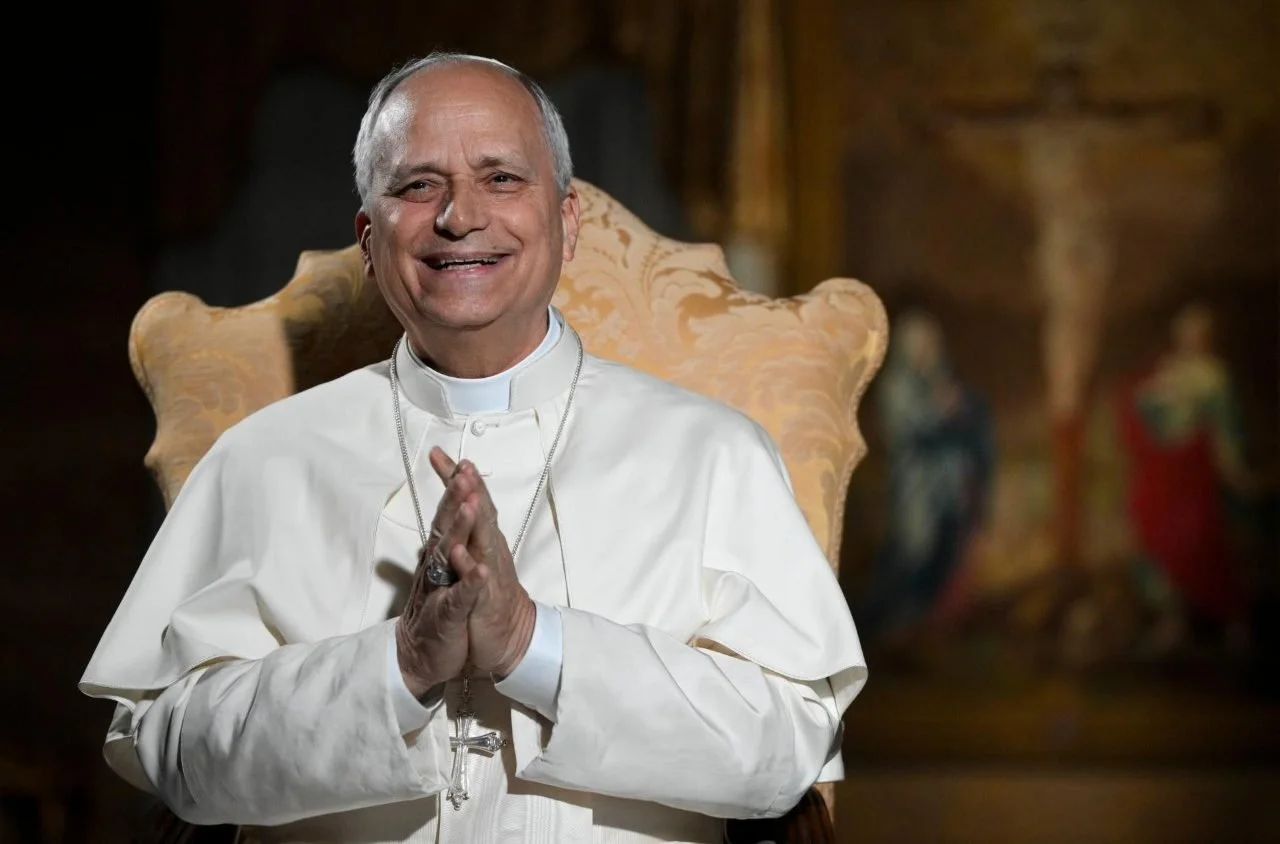
Pope Leo XIV meets online with over 15,000 teenagers gathered in Indianapolis, Indiana, and invites young Catholics to grow in friendship with Jesus Christ, use technology healthily to deepen their faith, and avoid using political categories to speak about the Church.
By Devin Watkins
Over 15,000 young people met with Pope Leo XIV via video link on Friday, as they attended the National Catholic Youth Conference (NCYC) in the US city of Indianapolis.
Moderated by Katie Prejan McGrady, the event saw six young Catholics ask the Pope to share his thoughts on topics ranging from the Sacraments and mental health to artificial intelligence and the future of the Church.
In his opening remarks, Pope Leo praised the American youth for taking the time to meet together in person, and encouraged them to be active members of their parish communities.
The conference gave them the chance to attend Mass, pray before the Blessed Sacrament, and receive the Sacrament of Reconciliation, and the Pope said these activities are “real opportunities to meet Jesus.”
Life in the Sacraments
The first question put to the Pope asked about accepting God’s mercy when we’ve sinned or let others down.
Pope Leo XIV acknowledged that everyone struggles with asking for God’s mercy and accepting that He truly does forgive us in Confession.
“Sin never has the final word,” he said. “Whenever we ask for God’s mercy, He forgives us. Pope Francis said that God never gets tired of forgiving—we get tired of asking!”
God’s heart, he added, is different than our own, since He never tires of searching for the lost sheep. The Pope invited young people to encounter Christ in the Sacrament of Reconciliation, confessing their sins openly and welcoming Jesus’ forgiveness in the priest’s absolution.
Struggling with depression and mental health issues
Next, the Pope responded to a question about mental health struggles, such as feeling sad or overwhelmed.
He invited everyone to open themselves to a deep relationship with Jesus, entrusting their difficulties to Him in prayer.
“In the quiet, we can speak honestly about what is in our hearts,” he said. “During Eucharistic adoration, you can look at Jesus in the Blessed Sacrament and know He looks at you with love.”
Young people, added the Pope, should also find trusted adults whom they trust, so that God can speak to them through others, such as parents, teachers, priests, and youth ministers.
He also invited them to pray for the gift of true friends, who push us to “seek Jesus when life gets confusing or difficult.”
“Many young people say, ‘No one understands me.’ But that thought can isolate you,” said Pope Leo. “When it comes, try saying, ‘Lord, you understand me better than I understand myself,’ and trust that He will guide you.”
Faith and technology
Answering a question about technology’s effects on faith, Pope Leo XIV upheld the usefulness of modern tools to connect people who are thousands of miles apart.
“Technology can help us do many things and even really help us live our Christian faith,” he said. “It also gives us amazing tools for prayer, reading the Bible, and learning more about what we believe.”
At the same time, the Pope noted that technology can never replace real, in-person relationships and participation in the Eucharist, inviting young Catholics to be intentional with their screen time and making sure that technology serves their lives, not the other way around.
Artificial intelligence, said Pope Leo, has become a defining feature of our times, pointing out that safety is not only about controlling the development of AI models but also about empowering people to make healthy decisions through education and personal responsibility.
Every tool should support our journey of faith and intellectual development, not hinder it, he said.
“Be careful that your use of AI does not limit your true human growth,” he said. “Use it in such a way that, if it disappeared tomorrow, you would still know how to think, create, and act on your own. Remember: AI can never replace the unique gift that you are to the world.”
Future of the Church
Pope Leo then responded to a question about the future of the Church, recalling Jesus’ promise to Peter that “the gates of hell will not prevail against the Church.”
The Church prepares for the future by remaining “faithful to what Jesus asks of us today,” he said, recalling that the Holy Spirit has guided the Church through two millennia of issues and challenges.
Young people, said the Pope, are not only the future of the Church but also her present, and he urged them to get involved by attending Sunday Mass and joining youth activities where their faith can grow.
“If you feel the Lord may be calling you to something specific, talk to your parish priest or another trusted leader,” he said. “They can help you discern what God is asking.”
Friends of Christ, missionaries of the Gospel
Finally, Pope Leo XIV expressed his hopes for the future of young people in the Church, inviting them to help shape her in the years ahead.
In response to their youthful desire to do something meaningful, the Pope urged young Catholics to offer their time and talents generously to build up the Church.
“Deep down, we long for truth, beauty, and goodness because we were created for them,” he said. “And this treasure we seek has a name: Jesus, who wants to be found by you.”
Young people are called to be friends of Christ and peacemakers, “who build bridges instead of walls, who value dialogue and unity instead of division.”
“Be careful not to use political categories to speak about faith,” he said. “The Church does not belong to any political party. Rather, she helps form your conscience so you can think and act with wisdom and love.”
In conclusion, Pope Leo invited young American Catholics to listen to God’s call in their lives and to discern their vocation, whether to marriage, the priesthood, or religious life.
“What greater cause could you dedicate your life to than the Gospel?” he asked. “The world needs missionaries. It needs you to share the light and joy you have found in Jesus.”
Cupich on 'Dilexi te': the Liturgy as a place of solidarity with the poor
Cardinal Cupich, Archbishop of Chicago, reflects for Vatican News on Pope Leo XIV's first Apostolic Exhortation. In his meditation he recalls the words of Saint John XXIII before opening the Second Vatican Council: the Church must be the Church of all and “particularly the Church of the poor.”
By Cardinal Blase Cupich, Archbishop of Chicago
Of the many insights gained from reading Dilexi Te (DT), I was particularly struck by Pope Leo’s observation that “The Second Vatican Council represented a milestone in the Church’s understanding of the poor in God’s saving plan,” and that this milestone shaped the entire direction of the Council and its reforms.
He notes that while the theme of the poor was only marginally alluded to in the preparatory documents, Saint Pope John XXIII called attention to it in a radio address a month before the opening of the Council, stating “the Church presents herself as she is and as she wishes to be: the Church of all and in particular the Church of the poor.”
These comments, according to Pope Leo, spurred theologians and experts to give the Council a new direction, which Cardinal Lercaro, the Archbishop of Bologna summed up in his intervention of December 6, 1962. He stated: “The mystery of Christ in the Church has always been and today is, in a particular way, the mystery of Christ in the poor....this is not simply one theme among others, but in some sense the only theme of the Council as a whole. ”
Lecaro later commented that in preparing his intervention he came to see the Council differently: "This is the hour of the poor, of the millions of the poor throughout the world," he wrote. "This is the hour of the mystery of the Church as mother of the poor. This is the hour of the mystery of Christ, present especially in the poor.”
It is in this context that DT offers a particularly revealing comment that provides us with a fresh understanding of the Council Father’s reform of the liturgy. "There was a growing sense of the need for a new image of Church, one simpler and more sober, embracing the entire people of God and its presence in history. A Church more closely resembling her Lord than worldly powers and working to foster a concrete commitment on the part of all humanity to solving the immense problem of poverty in the world."
In other words, the noble simplicity that Sacrosanctum Concilium pursued in calling for the restoration of the liturgy was not just some antiquarianism or simplicity for simplicity's sake. Rather, it was in tune with this “growing sense of the need for a new image of the Church, one simpler and more sober…” The liturgical reform aimed at allowing God's activity for us in the liturgy, particularly the Eucharist, to shine forth more clearly. The renewal of our worship was pursued in keeping with the Council Fathers’ desire to present to the world a church defined not by the trappings of world power but marked by sobriety and simplicity, enabling it to speak the people of this age in a way that more closely resembles the Lord and allowing it to take up in a fresh way the mission of proclaiming good news to the poor.
The liturgical reform benefited from scholarly research into liturgical resources, identifying those adaptations, introduced over time, which incorporated elements from imperial and royal courts. That research made clear that many of these adaptations had transformed the liturgy’s aesthetics and meaning, making the liturgy more of a spectacle rather than the active participation of all the baptized for them to be formed to join in the saving action of Christ crucified. By purifying the liturgy of these adaptations, the aim was to enable the liturgy to sustain the Church's renewed sense of herself, which St. Pope Paul VI noted in his address for the opening of the Council’s second session was in keeping with his predecessor’s inspiration in calling the Council, “to open new horizons for the Church and to channel over the earth the new and yet untapped spring waters of Christ our Lord’s doctrine and grace.”
It was also designed to empower the Eucharist to once again, as St. Pope John Paull II stated in his Apostolic Letter, Mane Nobiscum Domine, to be “a project of solidarity with all of humanity”, making those who participate in it “a promotor of communion, peace and solidarity in every situation. More than ever,” he continued, “our world (troubled)…with the spectre of terrorism and the tragedy of war, demands that Christians learn to experience the Eucharist as a great school of peace, forming men and women who, at various levels of responsibility in social, cultural and political life, can become promotors of dialogue and communion.” The saintly pope concluded in a way that foreshadows the teaching of Pope Leo by noting that it will be “by our mutual love and, in particular, by our concern for those in need (that) we will be recognized as true followers of Christ (cf. Jn 13:35; Mt 25:31-46). This will be the criterion by which the authenticity of our Eucharistic celebrations is judged.”
With the recovery of the ancient sobriety of the Roman Rite the Eucharist is once again the locus of genuine peace and solidarity with the poor in a fractured world.

St. Michael the Archangel
Message on the Solemnity of Saint Michael the Archangel
29 September 2025
His Eminence Frank Cardinal Leo
Metropolitan Archbishop of Toronto
My Dear Brothers and Sisters,
I am writing to you on the occasion of the Solemnity of Saint Michael the Archangel which the Church celebrates on September 29th, and who is the patron saint of the Archdiocese of Toronto. St. Michael reminds us that our Christian life is not adrift, happenstance, or a series of accidents, but a vocation. Living the life of a disciple is characterized by a call to stand with God in truth, charity, and justice. During this Jubilee Year — set aside by the Church as a time of renewal, reconciliation, and hope — our celebration takes on an added dimension, resetting our gaze on the ultimate horizon: God’s faithful love and the bright promise of immortality. As “Defender of the Church”, St. Michael reminds us that our hope is not naïve optimism but the theological virtue (CCC, 1817-1821) that steadies us amid conflict and distress (cf. Dan 12:1).
As many know, St. Michael’s Cathedral Basilica, anchored in the heart of the city, is named after the Archangel. Our feast recalls that the archdiocese’s very identity is stamped by the ministry of St. Michael: to worship God, resist evil, protect the vulnerable, and serve the common good (cf. Pope Francis, Address, 5 July 2013). When faced with a worldview that is myopically focused on the passing things of this world, a lost sense of sin, and promotion of harmful individualism, St. Michael’s patronage encourages us to be discerning, forward looking, and all-encompassing by recalling the primacy of God and placing our trust in God alone (cf. Pope Benedict XVI, Homily, Feast of the Archangels, 29 Sept 2007).
The name “Michael” comes from the Hebrew and means “Who is like God?” or in Latin, “Quis ut Deus?”. It is traditionally associated with the Archangel’s battle-cry and victory over Satan and as such stands as a question that humbles power and purifies misplaced zeal when taken seriously. It can serve to shape civic imaginations, and caution leaders, citizens, and disciples alike that no ideology can save, and no economic plan can heal the deepest wound of the human heart (cf. St. Gregory the Great, Homily 34). Only the living God — adored in the Eucharist, encountered in the poor, and proclaimed with expectant joy — can do that. This is the primacy of God proclaimed by St. Michael that bids us to go to hospitals, shelters, boardrooms, construction sites, indeed all places of work and leisure with a renewed vocation: to share the truth, to act justly, and to keep hope alive.
During this Jubilee Holy Year we are encouraged to engage in pilgrimages, the Sacrament of Reconciliation, and works of mercy, charity and justice. The feast of St. Michael is a natural waypoint for all three. Pilgrimage is not merely a physical trip, but a journey of the heart that involves conversion and confidence in God (Spes non Confundit, 5). The very name “Michael” calls for this conversion, purification and confidence. The Sacrament of Reconciliation is not mere moral bookkeeping or airing of dirty laundry, but a restoration of baptismal grace and recommitment of self. Again, it is the same clarity of vision and recommitment, the very light of Christ given at baptism that St. Michael bears against the “father of lies”. Finally, one of the four principal roles of St. Michael is to protect and defend God’s people. Our spiritual and temporal works of mercy — feeding, visiting, welcoming — are how we “push back” the darkness in the city we love. (cf. Spes non Confundit, 7-15).
My dear brothers and sisters, the upcoming Feast of St. Michael anchors our spiritual warfare of everyday living and fidelity. Nevertheless, our beloved patron is not a mascot for aggression but a model of adoration and service. In this Jubilee, may St. Michael teach us to choose praise over complaint, intercession over cynicism, and solidarity over isolation. Included with this letter is the Novena to St. Michael the Archangel. I would like to renew my invitation once again this year to join me in praying the Novena to St. Michael for authentic renewal of our Catholic institutions, parishes, schools and universities, healthcare and social agencies. The Novena to St. Michael begins on 20 September and ends on 28 September. Under his patronage, may the Archdiocese of Toronto grow as a city on a hill - where the beauty of the Gospel is proclaimed, the sacraments are celebrated, the poor are cherished, and hope rings out above the noise. Saint Michael the Archangel, pray for us.
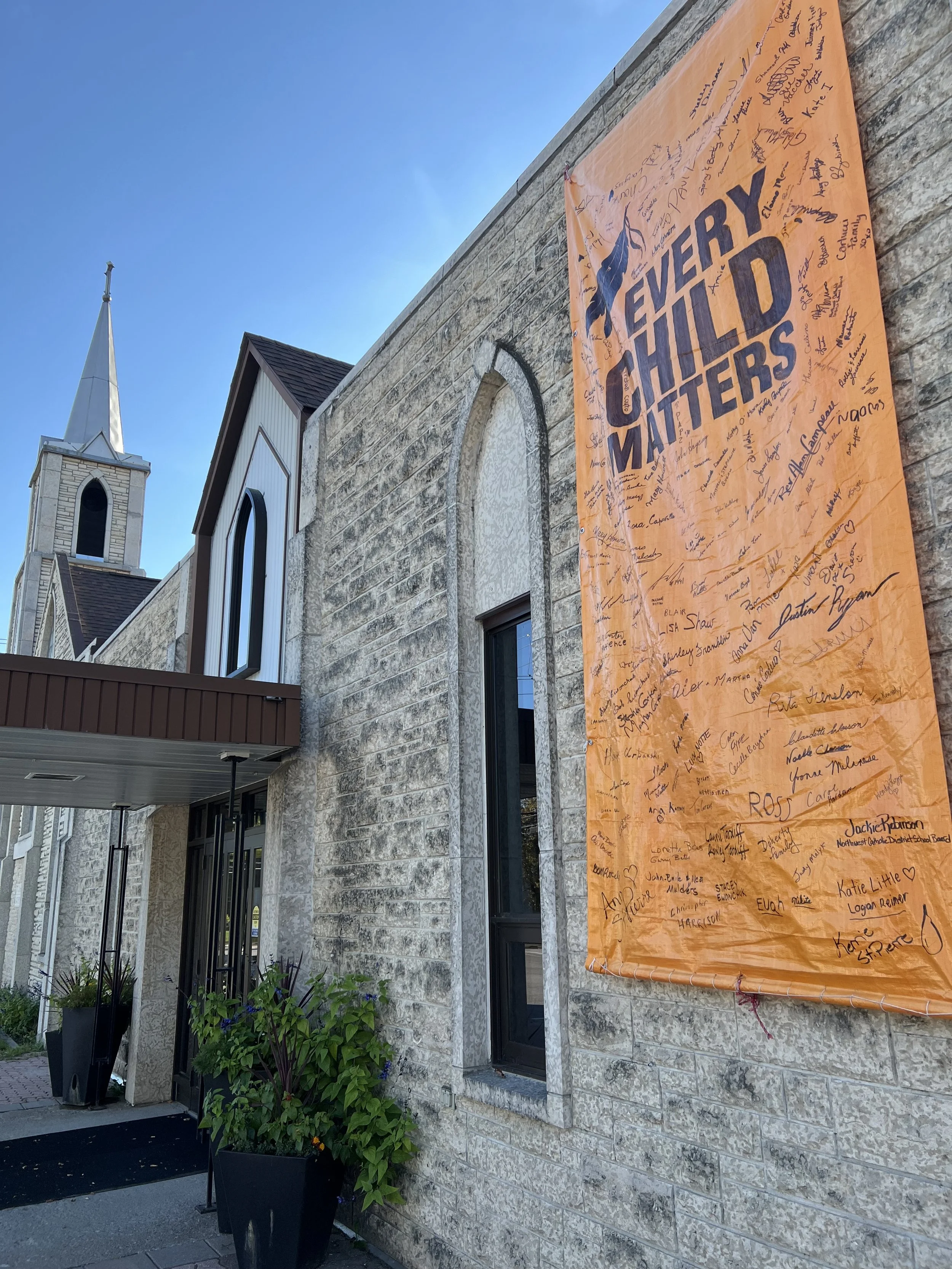
Blog post 2
Cardinal Blase J. Cupich
Tradition vs. traditionalism
September 3, 2025
The late Jaroslav Pelikan, a historian of Christianity, made an important distinction that is helpful to remember: “Tradition is the living faith of the dead, traditionalism is the dead faith of the living.”
That quote came to mind as I reflected on the recent decision of Pope Leo to declare Cardinal John Henry Newman a doctor of the church. A key factor in his decision to join the Catholic Church was his understanding of the development of doctrine. He observed that while Protestants readily accepted some doctrines that developed over time, such as the Trinity and the divinity and humanity of Christ, they were inconsistent in rejecting the analogous developmental history of other Catholic doctrines, such as purgatory and those related to Our Lady.
This understanding of the development of doctrine has a rich history in the life of the church. St. Vincent of Lérins, a fifth century monk, compared the maturation of the human form to the development of doctrine. He observed that “the tiny members of unweaned children and the grown members of young men are still the same members. Men have the same number of limbs as children. Whatever develops at a later age was already present in seminal form; there is nothing new in old age that was not already latent in childhood.” Likewise, “the doctrine of the Christian religion should properly follow these laws of development, that is, by becoming firmer over the years, more ample in the course of time, more exalted as it advances in age.”
At the same time, St. Vincent wrote, “If the human form were to turn into some shape that did not belong to its own nature, or even if something were added to the sum of its members or subtracted from it, the whole body would necessarily perish or become grotesque or at least be enfeebled. In the same way, the doctrine of the Christian religion should properly follow these laws of development, that is, by becoming firmer over the years, more ample in the course of time, more exalted as it advances in age.”
Newman’s writing on the development of doctrine greatly influenced the bishops as they addressed it in the Dogmatic Constitution on Divine Revelation. In paragraph 8 they wrote: “There is a growth in the understanding of the realities and the words which have been handed down. This happens through the contemplation and study made by believers, who treasure these things in their hearts (see Luke 2:19, 51) through a penetrating understanding of the spiritual realities which they experience, and through the preaching of those who have received through Episcopal Succession the sure gift of truth.”
I am convinced that the bishops approached the reform of the liturgy as an exercise in taking responsibility for the correct development of church teaching as manifest in the way we worship. In many ways, the reform was a recovery of truths of the faith, which over time were obscured by a series of adaptations and influences that reflected the church’s expanding relationship with secular power and society.
Particularly prominent during the Carolingian (seventh to ninth centuries) and baroque (17th to 18th centuries) periods, many adaptations were inserted in the liturgy that incorporated elements from imperial and royal courts, transforming the liturgy’s aesthetics and meaning. The liturgy then became more of a spectacle rather than the active participation of all the baptized in the saving action of Christ crucified.
One could easily read the bishops’ Constitution on the Sacred Liturgy, “Sacrosanctum Concilium,” as a correction of these Carolingian and baroque liturgical adaptations through a restoration of the liturgy’s original emphasis on active participation by the laity and a noble simplicity. These reforms were a direct response to the centuries of development that erroneously had transformed the Mass from a communal event into a more clerical, complex and dramatic spectacle.
What is at stake in accepting the liturgical reforms of the council, then, is our very understanding of what it means to be a church of tradition. On his flight back from Canada in 2022, Pope Francis observed that: “A church that does not develop its thinking in an ecclesial sense is a church that is going backward. This is today’s problem, and of many who call themselves traditional. No, no, they are not traditional, they are people looking to the past, going backward.”
In a word, the true understanding of Catholic tradition provides the church with the capacity to witness to the Gospel in new contexts. True reform is the church’s way of going deeper into the tradition in order to move forward.
Indeed, “Tradition is the living faith of the dead, traditionalism is the dead faith of the living.”